The Glass That Knew Everything
A fine-press fable — and the compression of my work into a story
A short illustrated fable in which knowledge turns out to be a bucket, not a well — my whole through-line compressed into one story, and read as the fine-press book it was made to be.
“It is for carrying. It carries everything we have dreamed, so you need not dream it twice. Mind you give it something worth the keeping.
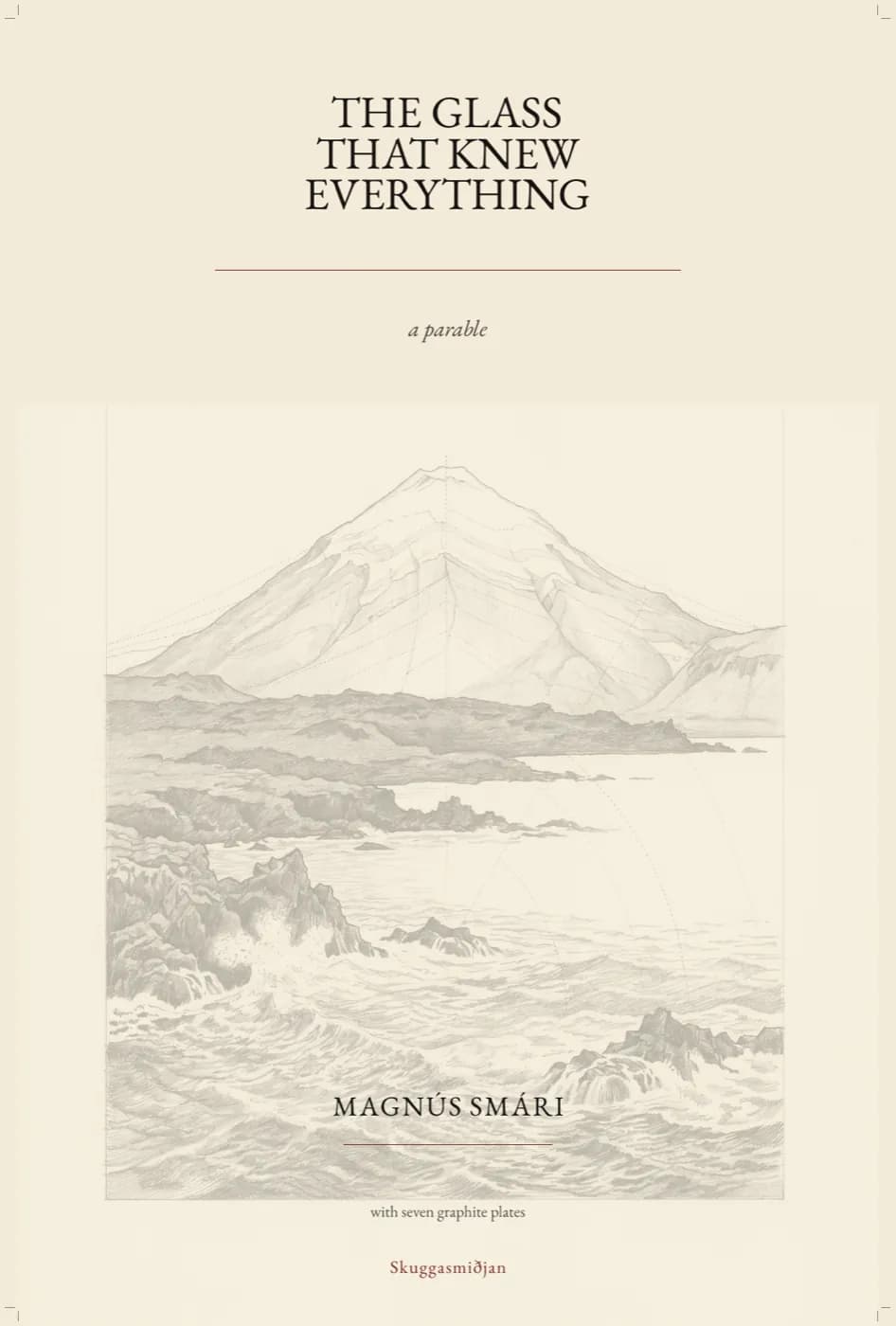
The Glass That Knew Everything is a short illustrated fable — and an experiment. It is an attempt to compress the spine of my work down into a single story: a glacier gives up a glass that holds all of human knowledge to the year 1423, a coast grows rich and content on its answers, and a difficult child discovers the thing was never a well to draw from but a bucket to fill.
That image — knowledge as a bucket, not a well; the machine as a statistical shadow of the past; the human part being the forward look that no data can hold — runs through everything else I do: Human History According to AI, the sovereign systems I build instead of renting a shadow from the cloud, the Temjum tæknina podcast. And the machine that set this page in front of you is itself the Glass — a shadow that holds what it is given, and waits to be taught.
Which is also how it was made. The story began as plain text; it was meant to be a book, so it became one; the first reader was mechanical, so we rebuilt it. Human direction, machine iteration — the same bucket, filled.
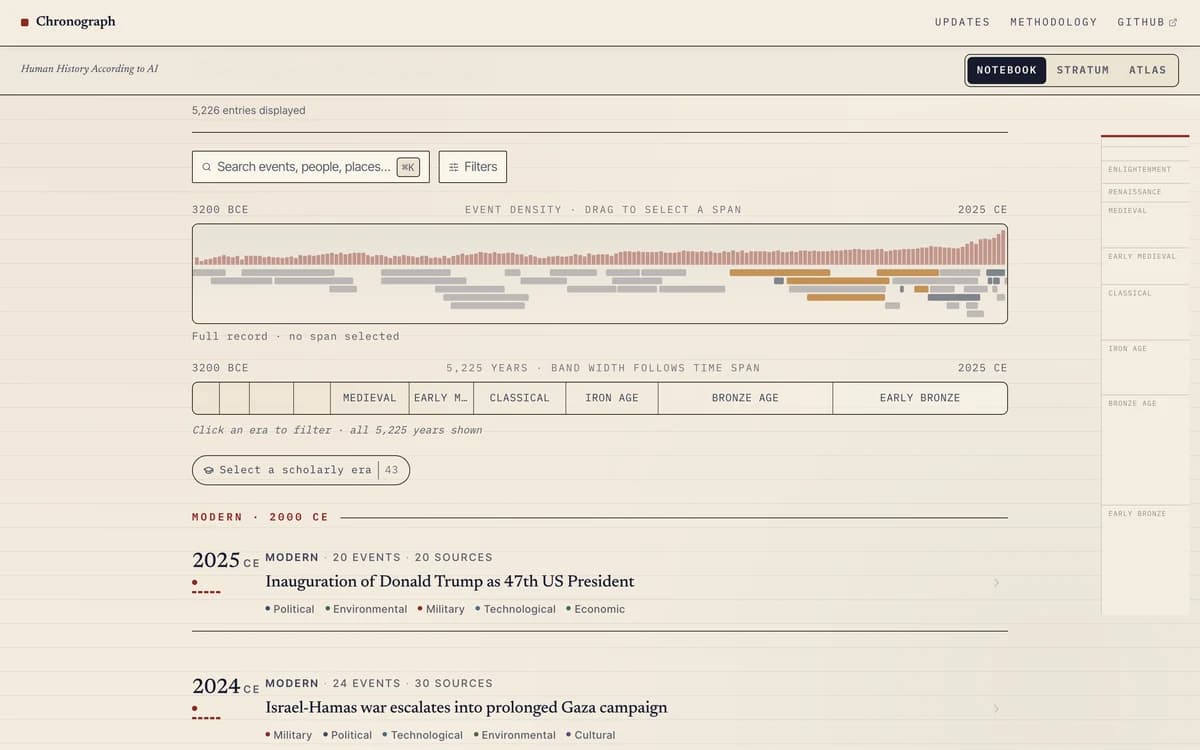
Companion: the year 1423 in Human History According to AI — the edge of the glass, rendered as a real folio.