The Glove Is a Database
Magnús Smári Smárason·
Share
Emergency medics have always known context engineering — they just called it a handover. The same skill now separates useful AI work from noise.
 AI
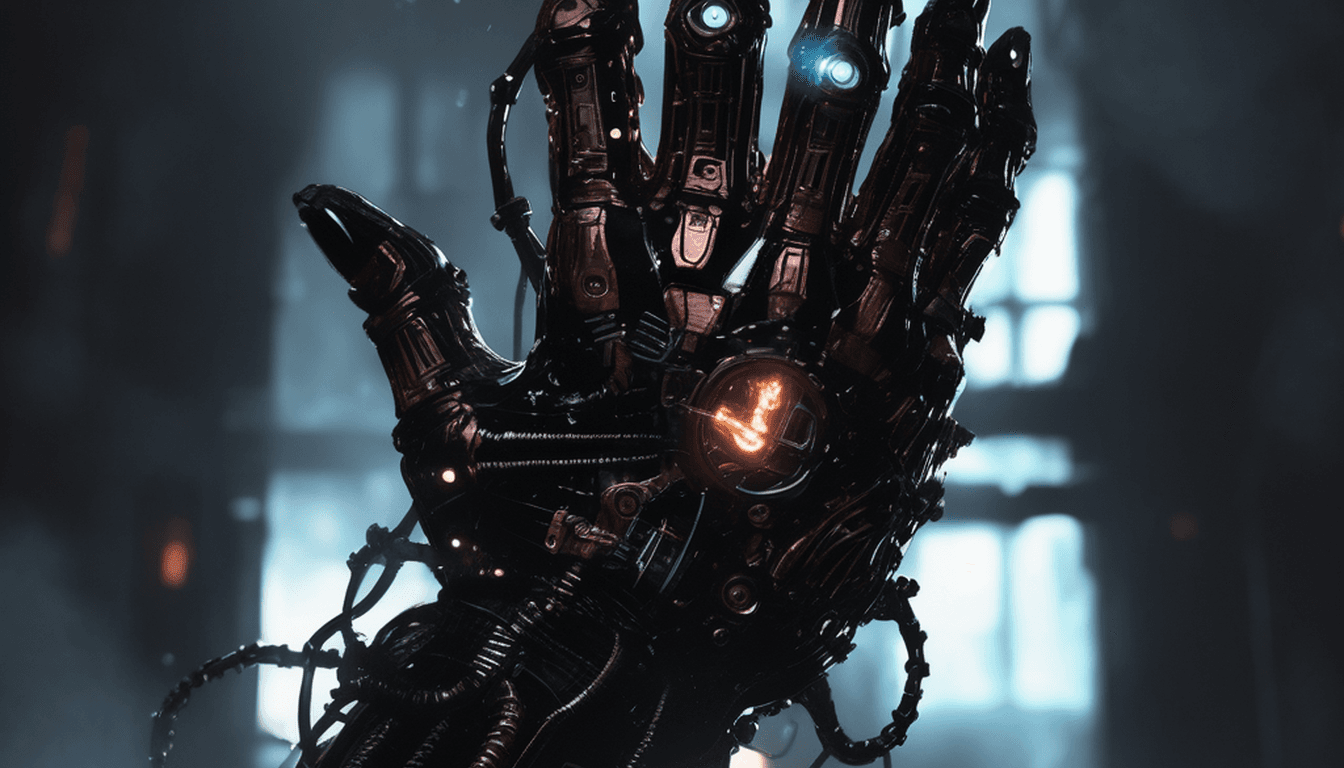
AIIn emergency medicine, you sometimes write on your glove.
Not because it's clever. Because there is no time, no clipboard, and the information has to survive from the scene to the resus bay without getting lost. A blood pressure. An allergy. The time a seizure started. You write it where your hand will be when you speak, and you hand the patient off in under thirty seconds.
A good handover can be the difference between the next clinician making the right call and the wrong one. A bad one is noise dressed up as diligence.
Drawing on my EMS career, I am still, years later, uncovering things I did every shift without ever noticing they were skills. The handover is one of them. I thought it was just how you talked. It isn't. It's aggressive filtering under pressure, performed thousands of times until it becomes invisible to the person doing it. You learn to throw away almost everything you saw. You keep what is actionable and what changes the next decision. Everything else is for the paperwork later, if at all.
The orchestration instincts I now use with AI agents — the ICS-shaped command structure, the clear roles, the handoffs between specialists — came from the same place. I didn't import them from a management book. They were already in my hands. I just hadn't named them.
I now build AI systems for a living, and I have started to see the same skill everywhere — and its absence even more clearly.
When people struggle with large language models, the failure is rarely the model. It is almost always the handover. They dump the entire chart into the context window. Every lab value, every prior note, every tangential detail, in the order it happened to arrive. Then they are surprised when the model treats a footnote with the same weight as the chief complaint. The model did exactly what a tired registrar would do at 3 a.m. with an unfiltered pile of paper: it grabbed whatever was on top.
The discipline that makes a paramedic useful is the same discipline that makes an AI agent useful. Decide what the next actor needs to make the next decision. Strip the rest. Structure what remains so it cannot be misread. Hand it off clean.
This is what I now call context engineering, though the name is less important than the posture. The posture is: I am responsible for what the receiver can act on. Not for what I witnessed. Not for what I know. For what survives the handover.
There is a second lesson, quieter than the first. In EMS, the filtering was tacit. Nobody taught it in a classroom. You absorbed it through calls, through senior medics cutting you off mid-sentence — “get to the point” — through the feedback of watching a handover land well or badly. It lived in your hands and your tongue, not on paper. Most of the people who have it do not know they have it. They certainly do not know it transfers.
It does transfer. Dispatchers have it. Experienced nurses have it. Machinists describing a fault to the next shift have it. Farmers reading weather have it. Air traffic controllers have it so completely that their entire profession is built on it.
These are the people who already know how to work with AI. They just haven't been told yet. The skill they spent a career developing — compressing a complex live situation into the minimum viable signal for the next human — is exactly the skill the next decade is going to pay for.
The glove was always a database. We just didn't call it that.
Related Articles
View all articles →
Blog
The Human & the Machine
The Amplifier on Morning Radio
I joined Morgunvaktin on Rás 1 about the Danish exam results, the comfort trap and AI in schools. Falling grades are a symptom, not a cause — and the gate was never there.
4 months ago

Blog
The Human & the Machine
It's not a box, it's a bucket
A conversation with Pietro Segreto about publishing, knowledge and AI — gatekeepers, the statistical shadow, the glass box of 1423, and the bucket each generation fills.
5 months ago

Blog
The Human & the Machine
AI won't learn the golf swing for you
Guðmundur Smári Gunnarsson and I start with golf and end in a larger conversation about the body, rhythm and AI as a training partner. Skill is built in the body.
5 months ago